






Huiwen: A Pattern Used Across Chinese Objects
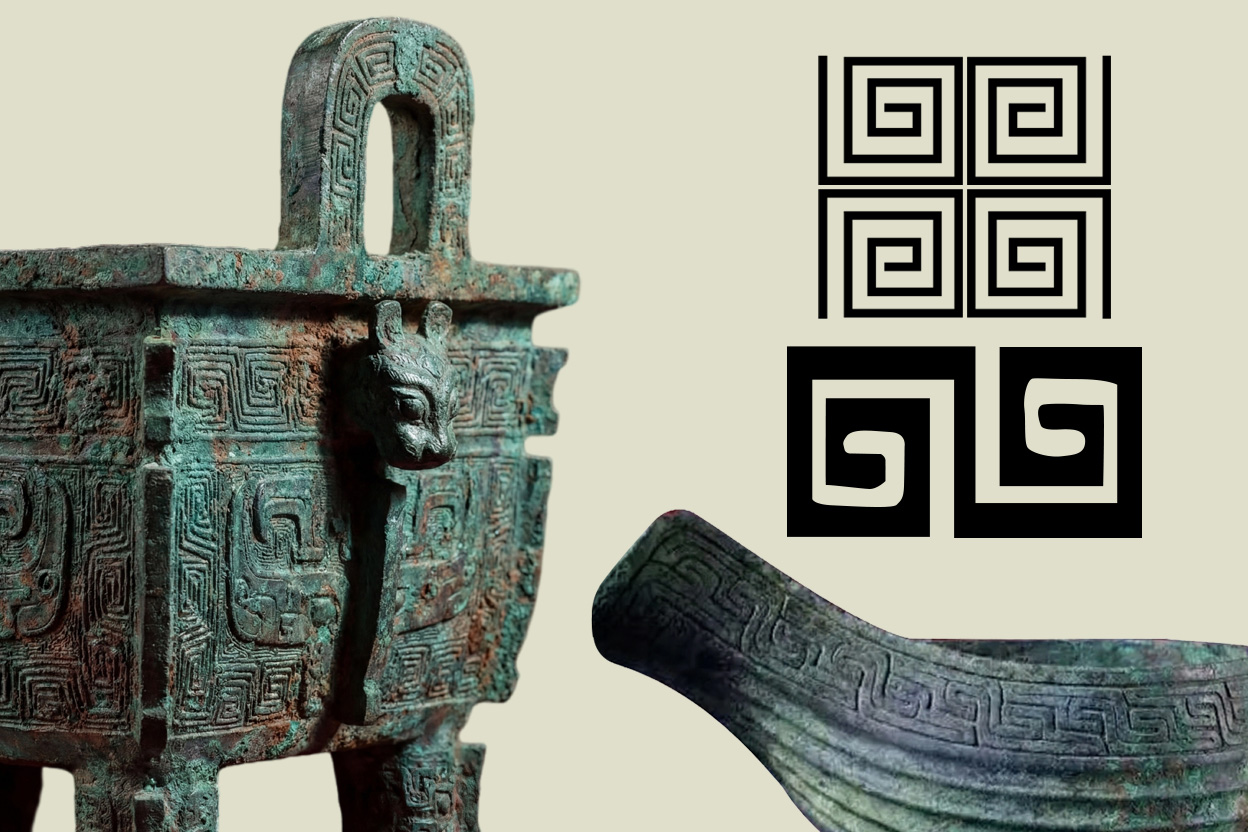
The Huiwen pattern, often understood as a Chinese meander pattern, is built from a repeated turning line. It folds, returns, and continues, forming a visual rhythm of order and continuity.
In Chinese visual culture, this kind of repeating geometric pattern has appeared across many kinds of objects. It can be seen in the language of ancient vessels, bronze decoration, ceramics, textiles, furniture, architectural borders, and later decorative arts.
Its role was not only to decorate.
A repeated border can organize a surface.\
A turning line can frame space.\
A continuous pattern can give an object a sense of rhythm, boundary, and structure.
This is why Huiwen feels especially suitable for jewelry.
Jewelry is worn close to the body. When a pattern of continuity is placed on a pendant, bracelet, or incense bead, it becomes more than surface detail. It becomes a small symbolic structure that can be carried.
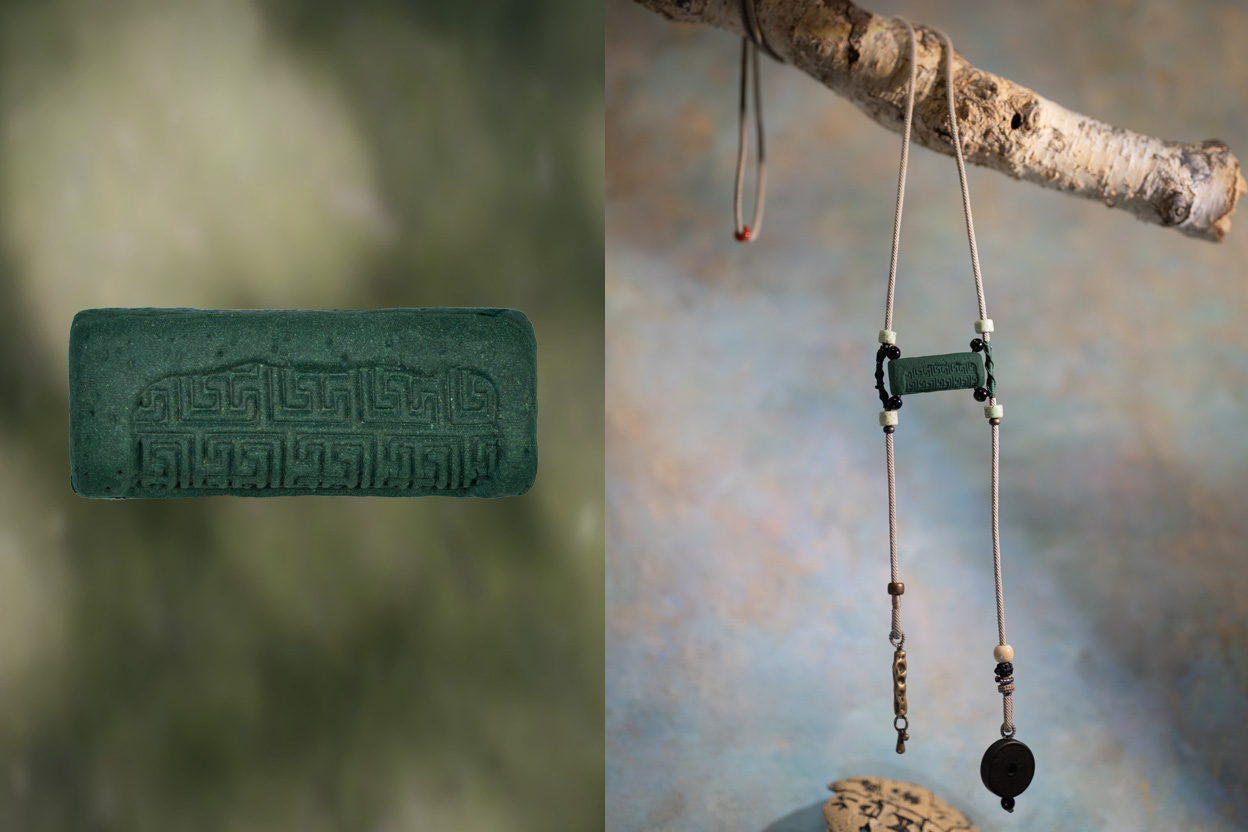
In Zcheer jewelry, Huiwen appears on the front of the incense piece. Its repeated turns suggest return, inner order, and the ability to stay centered while moving through the day.
Beidou: A Symbol of Direction
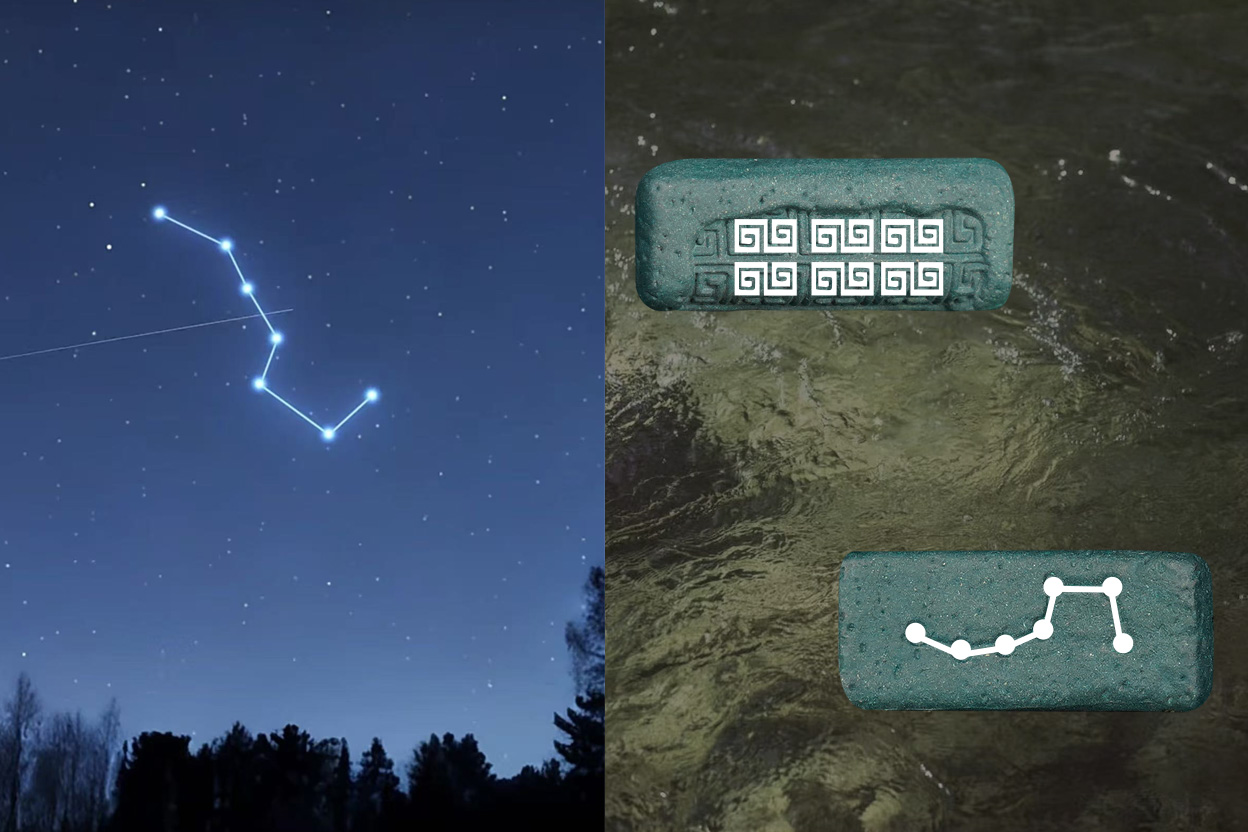
On the back of the piece is Beidou, the Big Dipper.
In Chinese cultural memory, Beidou is closely connected with orientation and guidance. It is a star pattern used to understand direction, but it also carries a symbolic meaning: knowing where you are, where you are going, and how to move forward with clarity.
Placed behind the Huiwen pattern, Beidou adds a second layer of meaning.
Huiwen speaks about return.\
Beidou speaks about direction.
One turns inward.\
The other points outward.
Together, they create a complete symbolic relationship: hold your center, and keep your direction.
This is why the front and back of the piece matter. The design is not only decorative on one side. It carries meaning through both surfaces.
Why These Symbols Belong in Wearable Incense Jewelry
Zcheer works with wearable incense spiritual jewelry, where scent, form, and symbol are designed together.
This matters because Huiwen and Beidou are not placed on ordinary metal alone. They are carried on an incense-based object — a piece made with natural incense material, shaped into something wearable.
The incense gives the piece a sensory layer.\
The carved or pressed pattern gives it texture.\
The symbols give it direction and meaning.
This is the difference between a decorative motif and a wearable symbol.
When the wearer touches the Huiwen surface, the pattern is no longer only visual. When the incense scent stays close to the body, the piece is no longer only ornamental. It becomes something seen, touched, sensed, and carried.
In this way, Zcheer translates Chinese symbolic design into a modern wearable form.
Not as a costume of tradition.
But as a quiet object of continuity, direction, and personal meaning.
Adjustable Necklace – Blue Medicine Incense Pendant with Dual Balance & Guardian Elements
A Structure You Carry Close
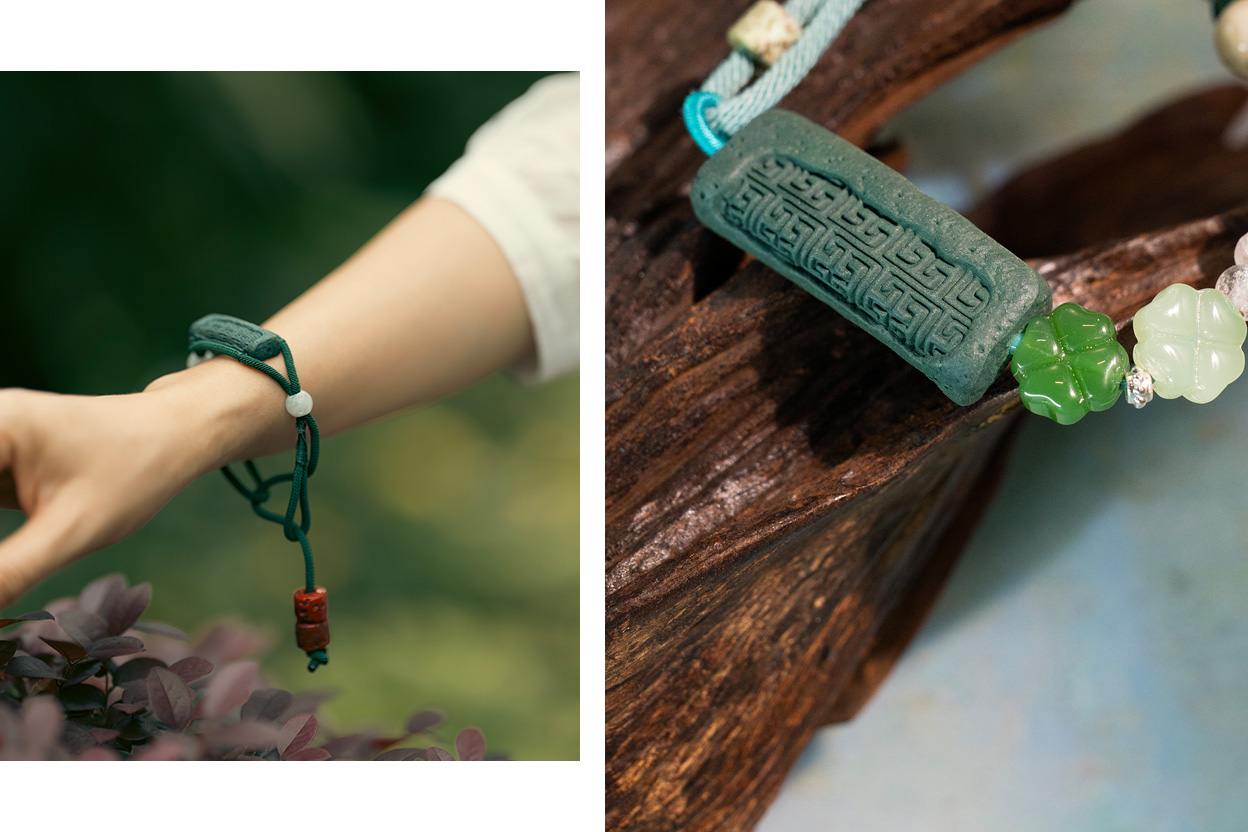
A Huiwen and Beidou piece can be worn as a pendant, bracelet element, or personal charm.
Its meaning does not depend on being explained to everyone else. The value is that the wearer knows why it was chosen.
On the front: a pattern that returns.\
On the back: a constellation that guides.
The Huiwen pattern creates a sense of boundary and inner order. The Beidou symbol adds direction and clarity. Together, they turn a small incense piece into symbolic jewelry that can stay close to the body.
This is the quiet strength of Zcheer’s design.
It does not need to speak loudly.
It only needs to be carried.
Adjustable Bracelet – Blue Medicine Incense Pendant with Flowing Structure